Dreaming about being watched
The sense of being watched is one of the most consistently reported dream experiences and one of the hardest to describe, because the watcher is usually never seen. In sleep paralysis it has a specific, well-documented physiological basis.
Also searched as: watched, observed, someone watching me, sensed presence

Being watched is unusual among dream contents in that it is almost entirely a feeling rather than an image. Dreamers report certainty about being observed with no visual information at all, no figure, no eyes, no direction, just the knowledge.
This entry has to hold two things, as the paralysis entry does.
In ordinary dreams, the sensed watcher is a common and unexplained feature, and it links to the watcher material in the Bestiary.
In sleep paralysis, the sensed presence is one of the three described components of the experience and has a physiological account behind it. It is the single most reported feature of sleep paralysis and one of the most frightening experiences people have.
Common associations
- Scrutiny and judgement, in the social reading.
- Threat detection running without a target.
- The sensed presence, which is a described phenomenon rather than a symbol.
- Exposure.
Positive readings
Rare, though a small number of reports describe the watching as benign or protective, and where that is the dominant quality, the Luminous Archive is the more relevant section.
Difficult readings
The watcher never resolving. Dreamers report scanning, turning, checking, and never seeing anything.
Being watched while asleep, which is the sleep-paralysis form and the most distressing.
Being watched by something that knows you have noticed, which is reported rarely and remembered vividly.
Psychological perspectives
The sensed presence phenomenon is genuinely interesting and studied. It occurs in sleep paralysis, in extreme environments (high altitude, isolation, endurance exertion) and in some neurological conditions. The leading account involves threat-detection systems activating without a corresponding percept: the brain signals someone is there without supplying who.
That is a much more satisfying explanation than it first appears, because it explains why the presence is never seen. There is nothing to see; the feeling is the whole phenomenon.
The social-scrutiny reading applies to ordinary dreams of being watched by identifiable people and is straightforward continuity.
Cultural and historical
The sensed presence during sleep paralysis has generated named traditions across a very wide range of cultures, and the consistency of the core experience against the diversity of the interpretations is the central finding of Hufford's work, and the founding argument for how this site's archive is built.
What the sleep science says
The sensed presence is one of the three described components of sleep-paralysis hallucination: the "intruder" factor, alongside the incubus and vestibular-motor factors. It is the most commonly reported element.
Sensed presence experiences occur outside sleep too, notably in extreme physical conditions and in certain neurological presentations, which supports a threat-detection account rather than anything requiring an external cause.
Reports are strikingly consistent across cultures, while the interpretation of what the presence is varies enormously.
Your own context
- Could you move? The first question, always.
- Did you ever see anything?
- What did you know about the watcher, without evidence?
- Where was it: behind you, above, in the doorway? Reports are oddly specific about this.
If this recurs
A recurring watcher is exactly the kind of report the Bestiary collects. If it recurs, the report form asks the questions that matter, including the contamination checks about prior exposure.
Emotions often reported
- dread
- fear
- terror
- unease
- helplessness
- safety
Specific being watched dreams
Each of these is written separately, not generated from this page.
Where it happened
What state it was in
Questions for reflection
These are for your journal, not for us. Nothing you write is shared.
- Could I move?
- Did I ever actually see anything?
- What did I know about it that the dream never showed me?
- Where was it in relation to me?
Dream interpretation is subjective. Nothing here is a diagnosis, a prediction, or medical advice.
Sources and reviewed references
4 references. What these labels mean
- 1.Sleep Paralysis and the Structure of Waking-Nightmare HallucinationsPeer-reviewed research
J. Allan Cheyne (2003) · Dreaming
Cited for: The three-factor structure of sleep-paralysis hallucinations (intruder, incubus and vestibular-motor experiences) which accounts for the recurring "presence in the room" and "pressure on the chest" reports.
- 2.The Terror That Comes in the Night: An Experience-Centered Study of Supernatural Assault TraditionsAcademic book
David J. Hufford (1982) · University of Pennsylvania Press
Cited for: The central finding behind this entire archive: that the "old hag" experience shows a stable core description across cultures with no prior exposure to the tradition. That is, the experience generates the folklore rather than the other way round.
- 3.Lifetime Prevalence Rates of Sleep Paralysis: A Systematic ReviewPeer-reviewed research
Brian Sharpless and Jacques Barber (2011) · Sleep Medicine Reviews
Cited for: Prevalence estimates for sleep paralysis across general, student and psychiatric populations.
- 4.Sleep Paralysis: Night-mares, Nocebos, and the Mind-Body ConnectionAcademic book
Shelley Adler (2011) · Rutgers University Press
Cited for: How culturally specific interpretations attach to a physiologically consistent sleep experience, and what happens when they do.
Dreamers’ accounts
How dreams of being watched have gone for other people, in their own words. Nothing here is an interpretation of anyone else's dream. It is a record of what happened and what it was like.
Nothing here yet. Be the first to say how this has gone for you.
Related records
- PlaceForestForests in dreams are about limited visibility more than about trees. The recurring reports are of not being able to see far, losing a path, and the specific quality of being watched by nothing identifiable.
- ActionBeing unable to speak or moveBeing unable to move or make a sound is extremely common, and it sits on the boundary between an ordinary dream and sleep paralysis. Working out which one you had is the single most useful thing this page can help with.
- ActionBeing naked in publicOne of the small handful of dreams reported across every population studied, alongside falling and being chased. The consistent feature is not the nakedness but the indifference of everybody else, and the shame that persists anyway.
- ActionA gameGames in dreams have rules the dreamer does not know and cannot ask about, and everybody else appears to know them. That structure is the clearest statement of something the first-day, examination and competition entries each describe in part.
- ActionA secretDreamers report holding a secret of enormous importance and being unable to say what it is. The weight is generated and the content is not, which makes this one of the purest examples of the pattern this database keeps finding.
- ActionBeing a child againDreamers regularly report being their childhood age with their adult mind, and accepting it entirely. The age is usually one where a great deal was encoded: the settings and the people come with it.


If you have this one often
A dream that frightens you and keeps coming back is its own subject. The nightmares section covers what is known about why they recur, the one rewriting technique with real evidence behind it, and when a nightmare stops being a dream problem and becomes something a clinician should hear about.
Figures people report during these dreams
From the archives, and held to their own evidence standard rather than to the one on this page. Reported alongside being watched often enough to be worth naming.
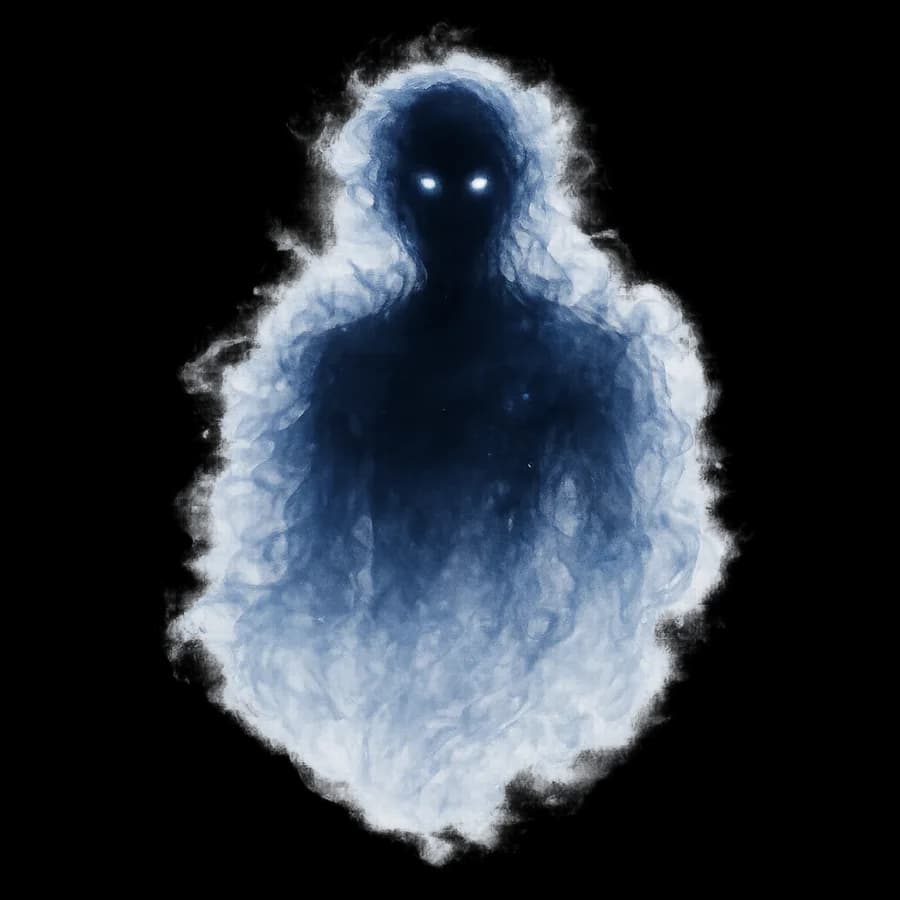
- Dream creatureThe Bedroom PresenceThe sense that someone is standing in the room, usually in a doorway or beside the bed, reported without any visual detail. It is the most common component of sleep paralysis and one of the most frightening experiences people have.Sleep-paralysis associated
- Dream creatureThe WatcherA presence at the edge of a dream landscape (treeline, doorway, horizon) that watches and does not approach. Distinct from the bedroom presence in that it occurs inside dream narratives rather than at the sleep boundary.Emerging pattern

Records that mention being watched
These pages link to being watched, either as something reported in the same dream or as a related subject. This page does not point back at all of them, so the list is assembled rather than chosen.