The Nocturnal Bestiary
The Hat Man
No reports collected on this site yet. See the assessment
- Sleep paralysis
- Hypnagogic (falling asleep)
- Hypnopompic (waking up)
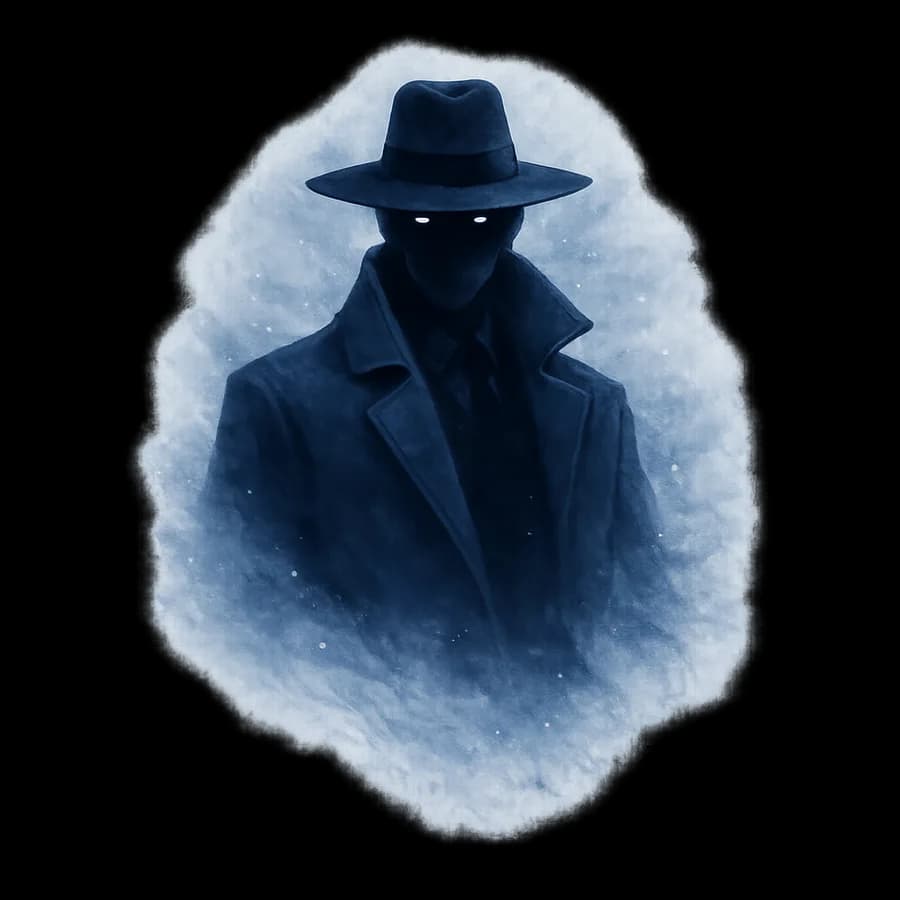
A tall dark figure in a brimmed hat, reported during sleep paralysis. The most famous entry in modern dream-entity folklore, and one where the evidence for independence is weaker than its reputation suggests.
Also called: hat man, the man in the hat, tall man with a hat, fedora man
This is an archive of what people report. A consistent description across independent reports is evidence that an experience recurs. It is not evidence that anything external exists. How this archive is built
The Hat Man is the best-known figure in this whole area and the one most often presented as proof that something shared is happening. The argument runs: thousands of unconnected people describe the same specific detail, a brimmed hat, and specificity like that cannot be coincidence.
It is a reasonable argument and it deserves a serious answer rather than a dismissal.
The answer is that the specificity arrived before most of the reports did. The Hat Man was described, named and widely circulated through paranormal media and internet forums, and the great majority of accounts postdate that circulation. Once a figure has a name and a defining feature, subsequent reports of an ambiguous dark shape have somewhere to land.
There is a second, quieter point that this page thinks is under-made: a brimmed hat is one of the few features that survives being rendered as a silhouette. A dark humanoid shape with a wide flat top reads as a hat, and there are not many other shapes a silhouette can distinctly have.
Editorial assessment
Confidence: internet-influenced.
This entry exists because the Hat Man is the single most-cited example of a shared dream entity, and an archive that quietly omitted it would be dodging the strongest popular case for the phenomenon.
Having looked at it, the honest verdict is that the independence condition is not met. The description was widely available before most reports; sleep-paralysis hallucination is a known mechanism; priming reliably shapes hallucinatory content; and a brimmed hat is close to the only distinctive feature a silhouette can carry.
What would change this: reports from people with no prior exposure, gathered before the term is mentioned to them, with the description elicited rather than confirmed. That is a collectable form of evidence and the report form is designed to gather it. If enough such reports arrived, this entry would be upgraded, and this paragraph would be the record of why.
Typical appearance
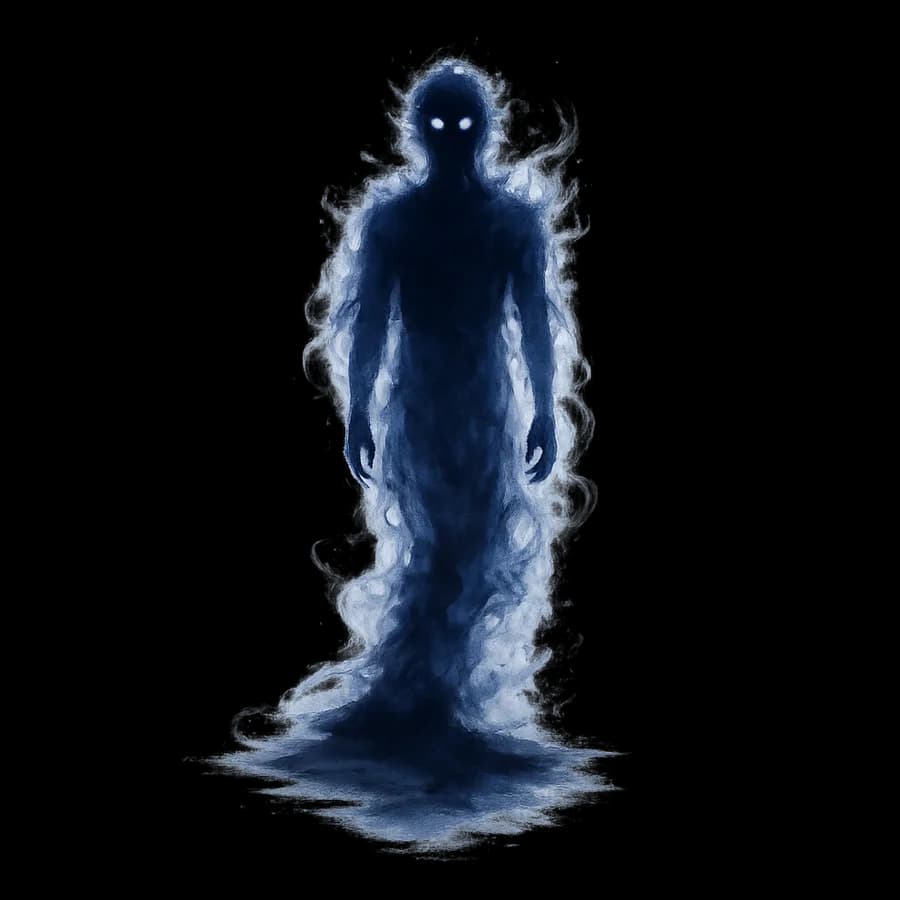
Tall, often described as unnaturally so. Solid black or very dark. A brimmed hat: fedora, trilby, or wide-brimmed. Occasionally a long coat or cloak. No face; occasionally red eyes in the more heavily internet-shaped accounts.
Typical behaviour
Stands and watches, usually in a doorway or at the foot of the bed. Does not approach in most reports. Does not speak. Reports emphasise malevolent attention without any action to justify it.
Where it appears
The sleeper's bedroom, during sleep paralysis, in the overwhelming majority of accounts.
Common encounter sequence
- Waking, unable to move.
- Awareness of a presence.
- A tall figure resolved, hat noted.
- Intense dread, sense of being regarded.
- Episode ends with full waking.
How the dreamer feels
Dread, and specifically a sense of being assessed. Several accounts describe an impression of contempt or indifference rather than aggression.
Earliest traceable reports
Individual accounts of hatted night figures exist earlier, and hat-wearing figures appear in various folk traditions.
The Hat Man as a named figure with a standard description dates to internet and paranormal-radio circulation from around the late 1990s and 2000s. That is the traceable origin of the current cluster, whatever preceded it.
Geographic and community spread
Global, and overwhelmingly English-language online. The geographic pattern follows internet communities rather than population.
Similarities and differences
Height varies from tall to enormous. Hat style varies. Some accounts include a coat; some include glowing eyes. Some place him at a distance, some at the bedside.
A minority of accounts describe him as neutral or even protective, which is interesting and under-collected.
Common associations
- Sleep paralysis, underneath.
- Priming and naming.
- Silhouette legibility: what a dark shape can distinctly be.
- The strongest popular case, examined properly.
Positive readings
Some reporters describe the figure as non-threatening, and a small number as protective. Those accounts are worth collecting precisely because they cut against the standard description: a report that does not match the template is more evidentially useful than one that does.
Difficult readings
Considerable fear, and in some reports a lasting reluctance to sleep in the dark or alone.
Psychological perspectives
As for shadow people: hallucinatory content is shaped by expectation, sleep-paralysis hallucination is well described, and the sensed-presence component supplies the certainty of attention without supplying anything to see.
Cultural and historical
A genuine and vigorous piece of contemporary folklore, documented as such.
What the sleep science says
Sleep-paralysis hallucination with a sensed-presence component. Priming effects on ambiguous percepts. No evidence of anything external and no proposed mechanism.
Your own context
- Had you heard of the Hat Man before your experience? The whole entry rests on this.
- Did you see a hat, or a shape you interpreted as one?
- Could you move?
- Did anyone suggest the name to you before you described it?
If this recurs
Recurrent sleep paralysis, tracked in the sleep log, is the actionable part.
Emotions often reported
- dread
- terror
- fear
- helplessness
Questions for reflection
These are for your journal, not for us. Nothing you write is shared.
- Had I heard of the Hat Man before this happened?
- Did I see a hat, or a shape I later called a hat?
- Did someone name it for me before I described it?
- Could I move?
Dream interpretation is subjective. Nothing here is a diagnosis, a prediction, or medical advice.
Sources and reviewed references
4 references. What these labels mean
- 1.Sleep Paralysis and the Structure of Waking-Nightmare HallucinationsPeer-reviewed research
J. Allan Cheyne (2003) · Dreaming
Cited for: The three-factor structure of sleep-paralysis hallucinations (intruder, incubus and vestibular-motor experiences) which accounts for the recurring "presence in the room" and "pressure on the chest" reports.
- 2.The Terror That Comes in the Night: An Experience-Centered Study of Supernatural Assault TraditionsAcademic book
David J. Hufford (1982) · University of Pennsylvania Press
Cited for: The central finding behind this entire archive: that the "old hag" experience shows a stable core description across cultures with no prior exposure to the tradition. That is, the experience generates the folklore rather than the other way round.
- 3.Lifetime Prevalence Rates of Sleep Paralysis: A Systematic ReviewPeer-reviewed research
Brian Sharpless and Jacques Barber (2011) · Sleep Medicine Reviews
Cited for: Prevalence estimates for sleep paralysis across general, student and psychiatric populations.
- 4.Sleep Paralysis: Night-mares, Nocebos, and the Mind-Body ConnectionAcademic book
Shelley Adler (2011) · Rutgers University Press
Cited for: How culturally specific interpretations attach to a physiologically consistent sleep experience, and what happens when they do.
Encounters
How the hat man has actually turned up for other dreamers, in their own words. Add a drawing if you have one. A picture describes a figure in a way that the words on this page have not already shaped.
Nothing here yet. Be the first to say how this has shown up for you.
Specific encounters
The variants people report most often. Each is written from the accounts rather than composed from this page.
What happened
What state it was in
Related figures
- Dream creatureThe Bedroom PresenceThe sense that someone is standing in the room, usually in a doorway or beside the bed, reported without any visual detail. It is the most common component of sleep paralysis and one of the most frightening experiences people have.Sleep-paralysis associated
- Dream creatureThe Shadow PersonA dark humanoid figure, featureless, often seen at the edge of vision. The underlying experience is well documented; the name, the appearance and the shared details are substantially a product of the internet, and this page treats them separately.Internet-influenced
- Dream creatureThe Old HagThe best-evidenced entry in this archive, and the one that founded the method. A crushing presence during sleep paralysis, reported with a consistent core description across cultures that had no contact with each other.Widely reported
- Dream creatureThe One in the CornerA figure standing in the corner of the bedroom, seen on waking, that does not approach. It is among the most consistently described positions in the sleep paralysis literature and the position itself is the distinctive feature.Sleep-paralysis associated
- Dream creatureThe Black DogA famous folkloric figure with a very thin dream record. Included, and marked insufficient, as a worked example of an entry that does not meet this archive's standard.Insufficiently verified
- Dream creatureThe Crawling FigureA figure that moves on all fours, or in a way a body should not, approaching the bed. Where the corner figure is defined by stillness, this one is defined entirely by how it moves.Sleep-paralysis associated